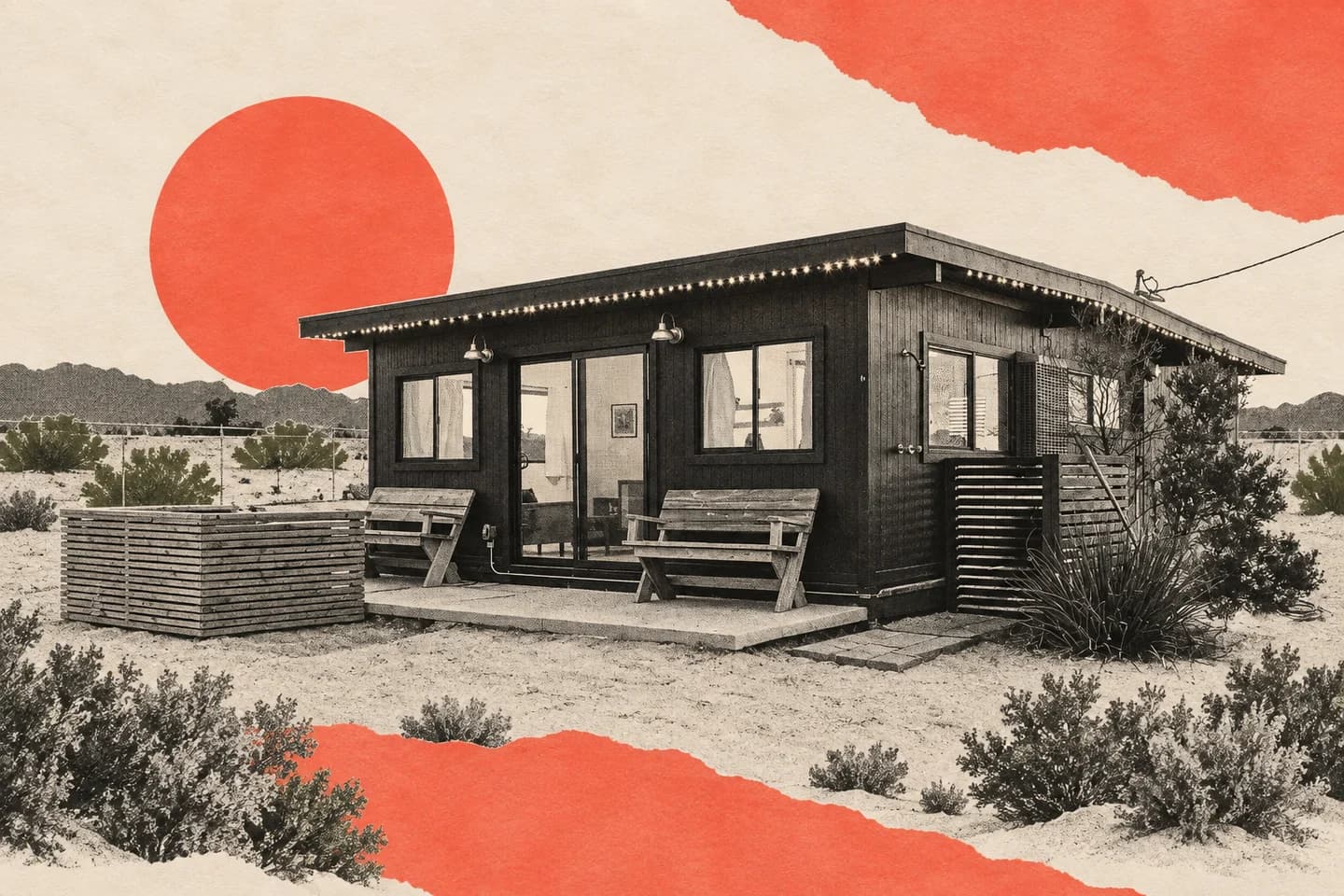
In 2019, my wife and I bought a 530-square-foot cabin outside Joshua Tree and welcomed our first guests two weeks later. We were not real estate investors. We were two people who wanted to find out what hosting was like.
Our friends Rich and Sara at The Joshua Tree House made it look possible. The Bluegrass Cabin was small, turnkey, and fairly priced. Low enough risk that we could learn two things at once: whether we actually liked hosting, and whether vacation homes could work for us financially.
The first answer came fast. We loved it.
Some of that was the obvious pleasure of a good review. Most of it was something else. People save up for a trip, weigh a dozen options, and choose your house, often for a birthday, an anniversary, or a week they've needed for months. You make the place; they make the memory. That mattered to us more than we expected.
The rest of it was a surprise, and it's the reason I'm writing any of this down.
I've spent just over 20 years doing digital product design for technology companies, as a hands-on designer and as a leader of teams. Software is temporary by design. You ship, you measure, you change it quarterly, monthly, weekly, sometimes daily, and the thing you made a year ago no longer exists. A house is the opposite. It's built to last, and it's meant to change slowly and on purpose. After two decades of making things that dissolve, making something that stays turned out to be deeply satisfying.
You make the place; they make the memory.
The move we weren't sure about
In 2020, at the start of the pandemic, we sold our home in Berkeley and moved to Saint Helena. Same instinct as Joshua Tree: buy the house, find out whether we liked living in the Napa Valley, and know that if it didn't work, we could rent it out long-term and move back to the Bay Area.
We liked it. We have three young kids in the local public schools, which are excellent. It's a beautiful town with a real economic mix, enough that we feel connected to people whose lives look nothing like ours. We've since moved into a house we rent and hope to buy someday, and put that first Saint Helena home into the long-term rental market here.
The remodel we didn't plan for
In late 2021, we added a second vacation rental near the Sonoma Coast, a stretch of land that's carried us through a family loss, given us long days outside with our kids, and pulled us out of the day-to-day for years.
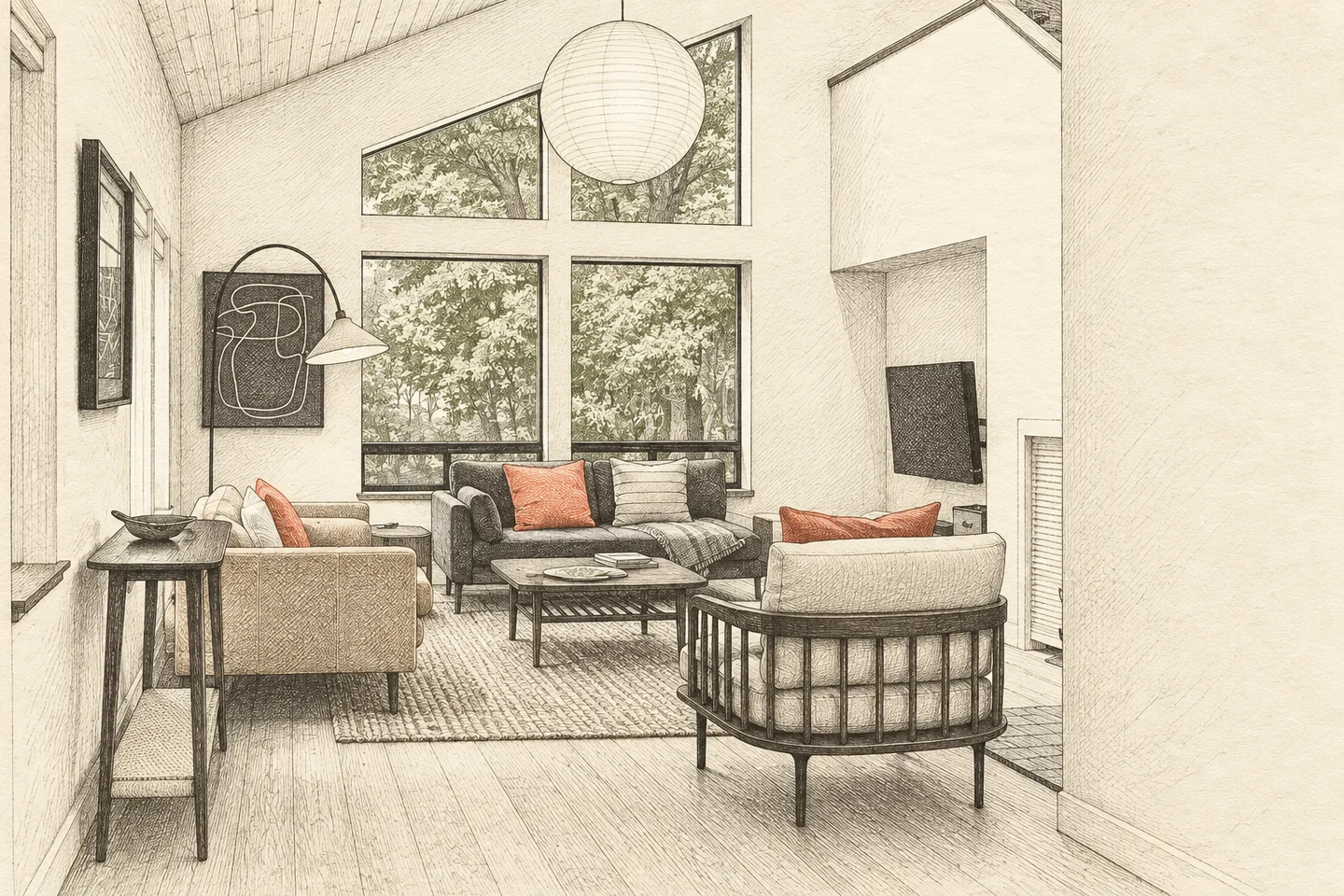
This one was not turnkey. It was an architecturally beautiful home, hidden behind poor design choices, but we could see the potential. Then, in October 2021, a faulty toilet flooded the house for three days while we were away. By chance, our handyman noticed and let us know. We had to remodel it. Nothing about that was in the plan, and it taught us a great deal in a very short time. The remodel took a few months, but it paid off: bookings picked up, and the interior design set the house apart from the typical aging Sea Ranch home. I'll write more about how we approached it.
What's next
We're finishing our first major renovation of the Joshua Tree cabin, the first real work we've done to it in four years. New professional photos arrive next week, and I'll use them to walk through what we changed, why we chose those upgrades over others, how we managed the work, and what we still haven't fixed.
That post is the kind of writing I want to do here. I want to bring 20 years of design and technology thinking to real estate and hospitality: the decisions, the numbers behind them, the mistakes, and the parts nobody puts in the listing photos. I'm not writing as an expert. I'm writing as someone three houses in, learning fast, and hoping the dialog teaches me as much as it teaches you.
If real estate, short-term rentals, hospitality, design, and the business of running all of it sound interesting, follow along. And if you know someone in the middle of buying their own first place, send it to them.